
Tile and Flooring · St. George, Utah
Tile and flooring in St. George, Utah, chosen for this valley.
St. George Bath & Kitchen does tile and flooring in St. George, Utah, and a floor in this valley has to take three things at once: heat, red dust, and water. St. George is dry, hot, and bright, with red dust that scratches. A floor that moves with humidity will gap. A floor that is porous will stain, which is why waterproof flooring earns its place in the wet rooms. A floor in a bathroom that is not waterproofed as a system will fail, however good the bathroom tile looks. This page tells you how to choose a floor for a house in St. George, and it prices floor installation inside a kitchen remodeling or a bathroom remodeling scope.
Wet room or dry room decides the family; traffic and sun decide the rest.
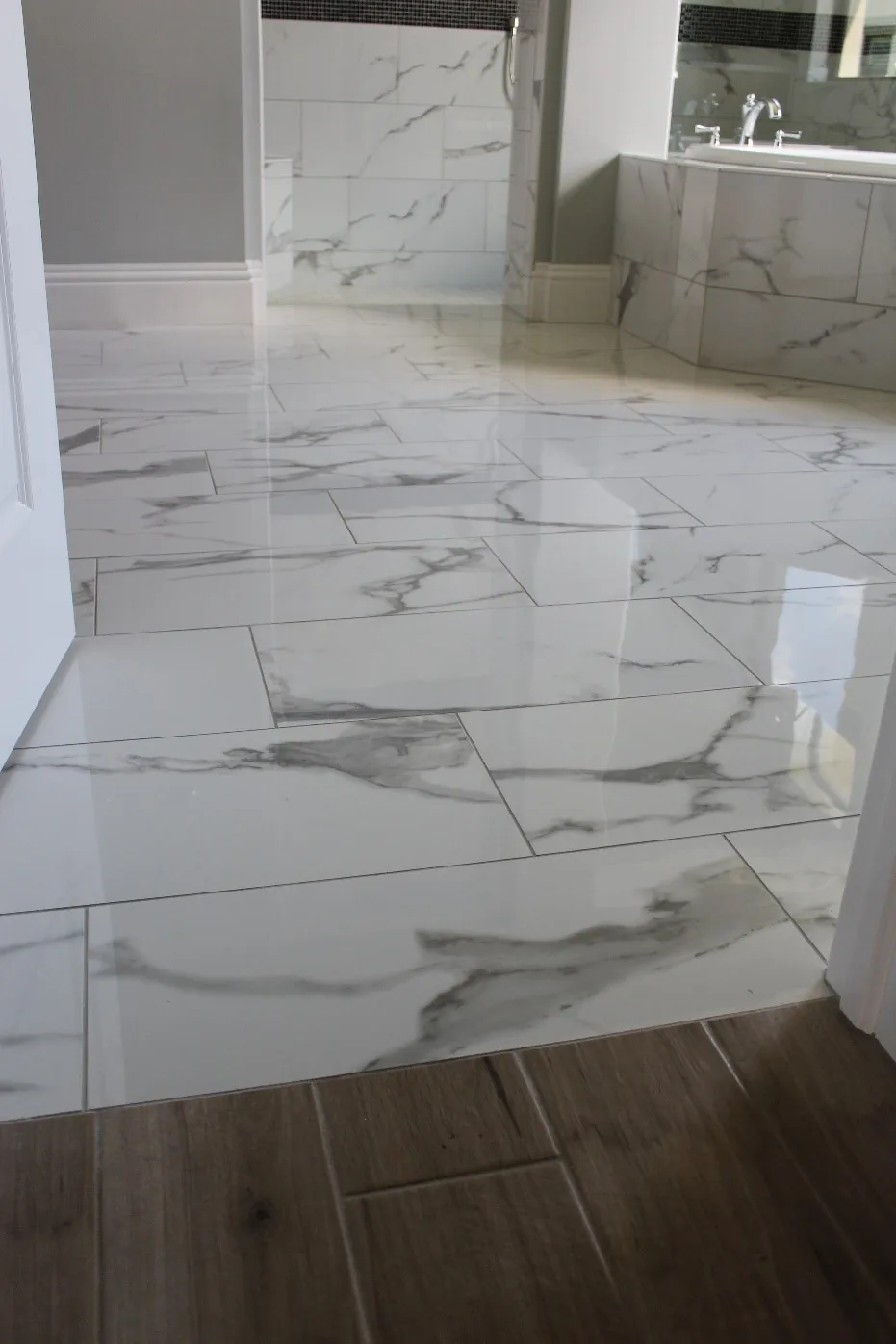
Heat first. Summer heat and a south-facing room ask a floor to stay put when the room gets hot and dry. Porcelain tile is the floor most rooms here choose. It is denser and less porous than ceramic tile, it handles heat, and it resists red-dust scratching. Engineered hardwood is far more stable than solid hardwood in desert dryness, which can crack, and a south-facing room needs a UV-cured urethane finish on wood.
Red dust second. Dust comes in on shoes and on the wind, and it scratches. Porcelain tile resists it. Luxury vinyl plank needs a wear layer that can take traffic and dust, because a thin wear layer will show the dust first. Hardwood needs the finish that can take it, and a floor that is soft will show every grain of dust that gets walked across it.
Water third, and only in a wet room. A bathroom floor is a waterproofing system first and a tile second. The floor is graded to the drain, the waterproofing is built as a system behind the tile, and the tile goes on last. A kitchen floor takes spills, and a laundry floor takes a leak, and both need a floor that can be wiped clean and a surface that does not hold water.
Luxury vinyl plank is dimensionally stable where hardwood shrinks and gaps, which is why it suits a dry room that gets traffic. It is not a wet-room floor on its own. The room decides, and the floor follows the room.
Hex floor sheets being laid at the frame’s edge. Sheet goods make a small-tile floor honest work instead of a thousand single settings.

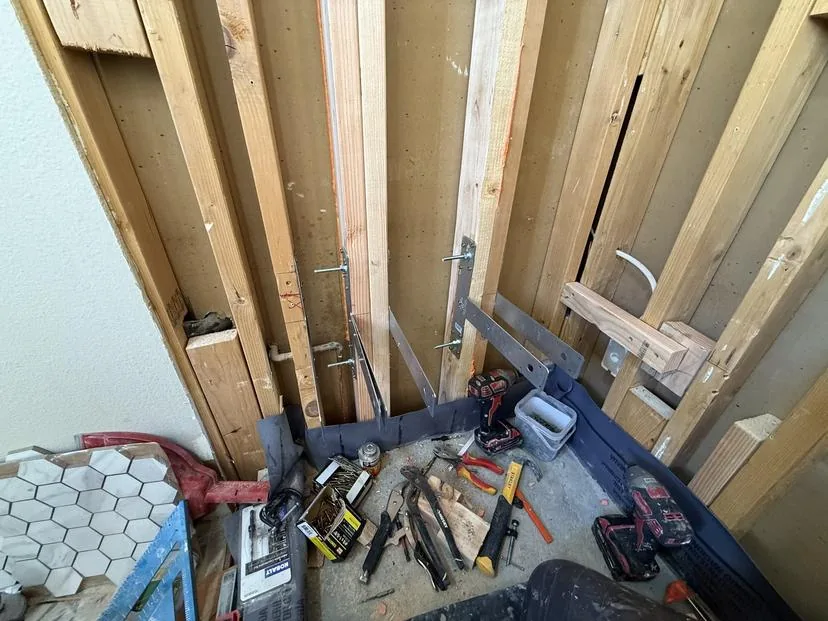
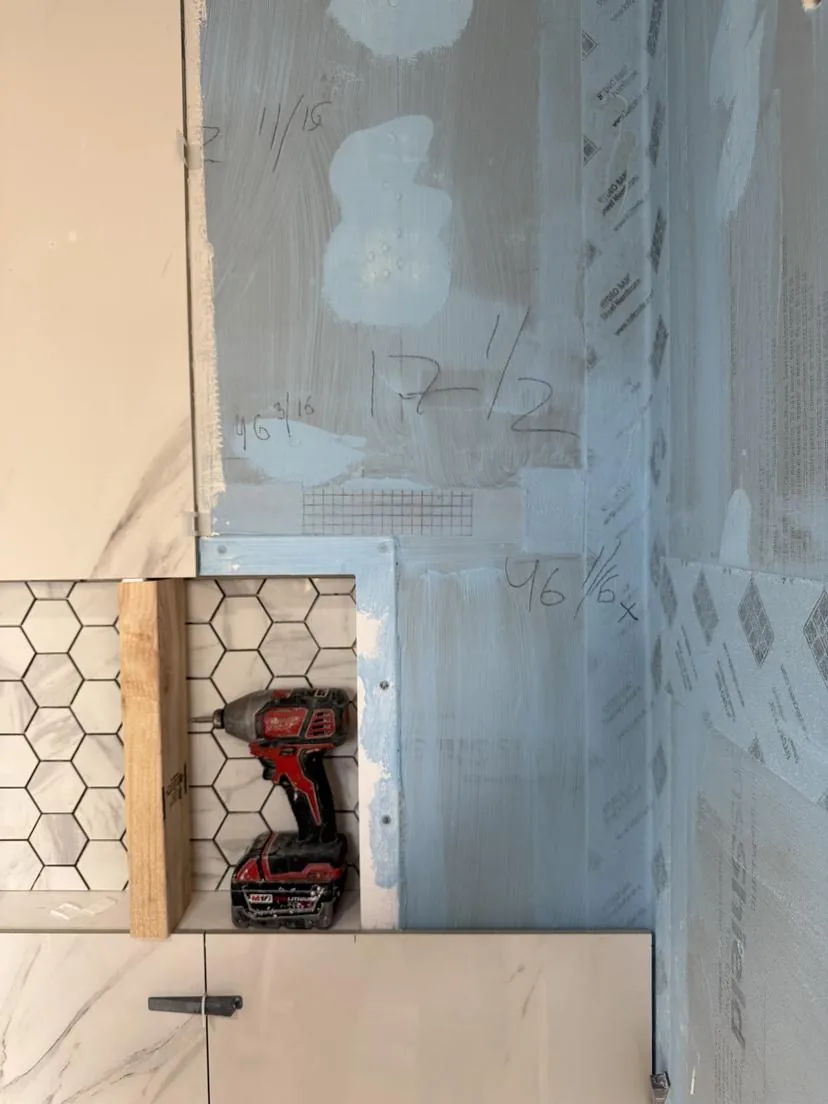
The floor opened at the pan stage: the bench framing and the opened floor read together, before anything is covered. What a floor takes is decided here.
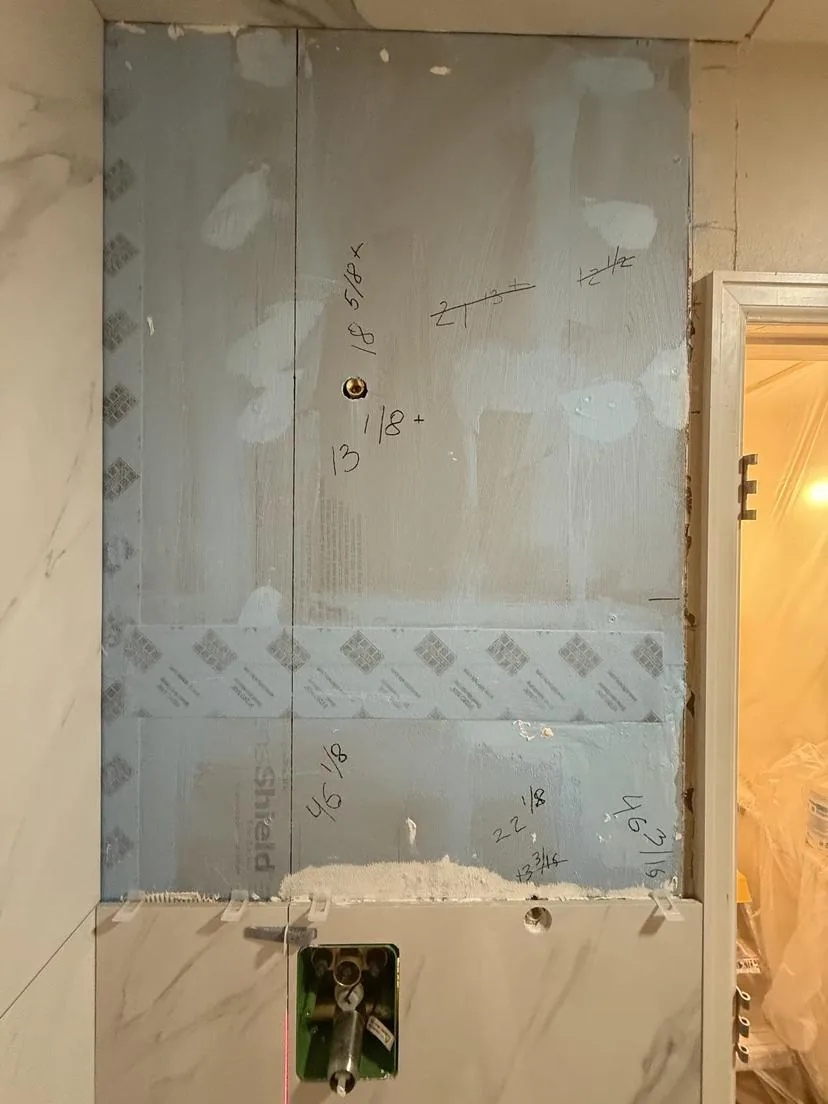
Tile going on over the membrane. The membrane is the floor’s waterproofing; the tile is its wearing surface, and the order matters.
Ranges plan the job. The written estimate prices your room, itemized, before anything is ordered or demolished.
Tile and flooring are priced as a component inside the kitchen and bathroom scopes. A kitchen refresh runs $12,000 to $28,000, a midrange kitchen $30,000 to $65,000, and a full-gut kitchen $55,000 to $95,000, and the floor is a component inside each one. A bathroom refresh runs $8,000 to $15,000, a full bathroom $18,000 to $32,000, and the floor is a component inside each one, with the waterproofing rebuilt as a system behind the tile in a full bathroom. A tile or flooring only job, where the rest of the room is sound, is priced in the written estimate as its own scope, per square foot, from the material and the area.
Those are our typical ranges. Your written estimate prices the floor you choose, and it is the number that governs.
A bathroom in Washington Fields came to us with a floor that had given out before the tile had, stained and cracked at the shower floor where water had got behind it. The before frame shows a floor that could not take water. The after frame shows fresh porcelain tile with clean grout, and waterproofing rebuilt as a system behind it. The teaching point is in the floor. A bathroom floor is a waterproofing system first and a tile second, and a floor that looks right and fails underneath was never the right floor.
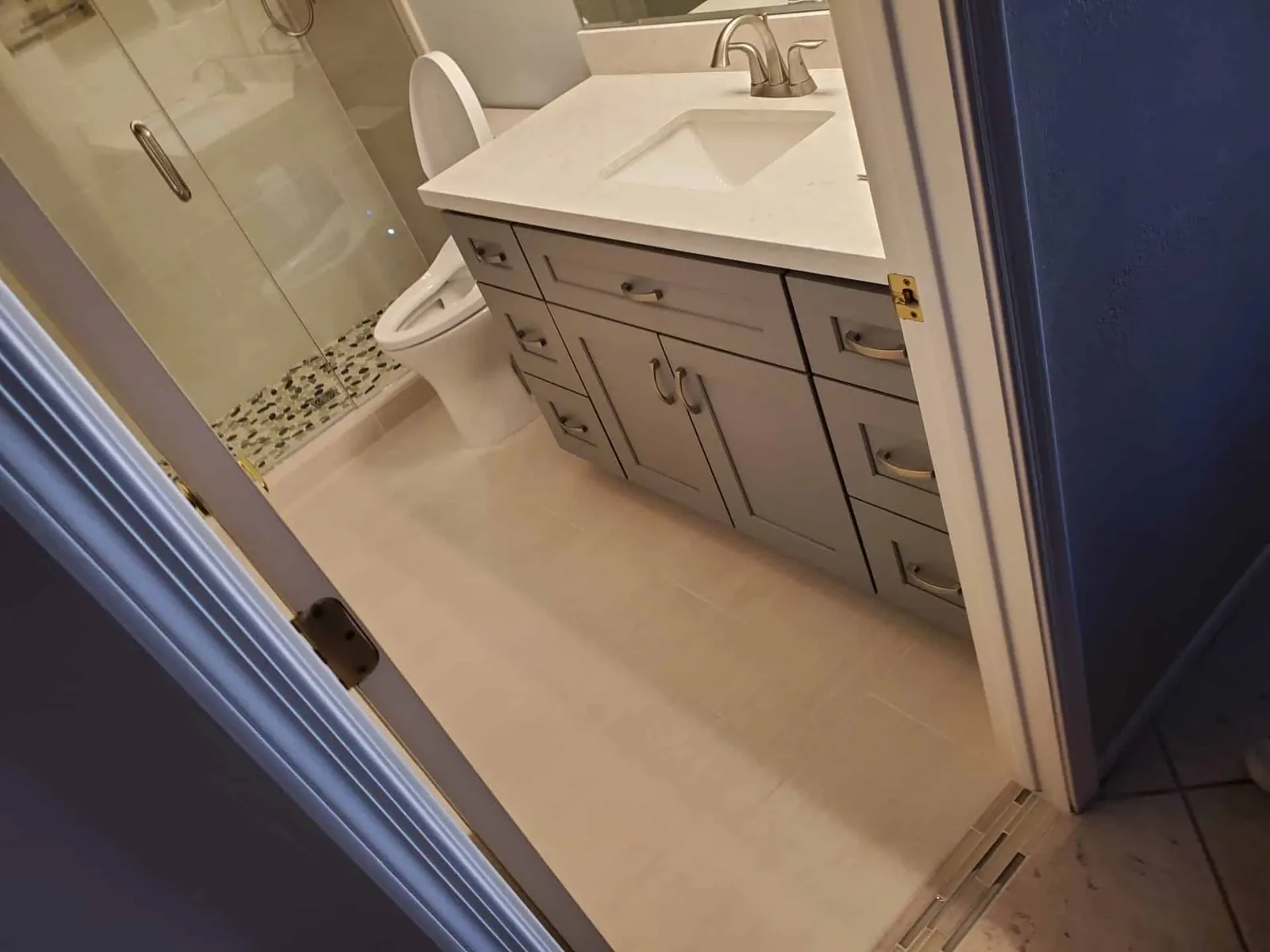
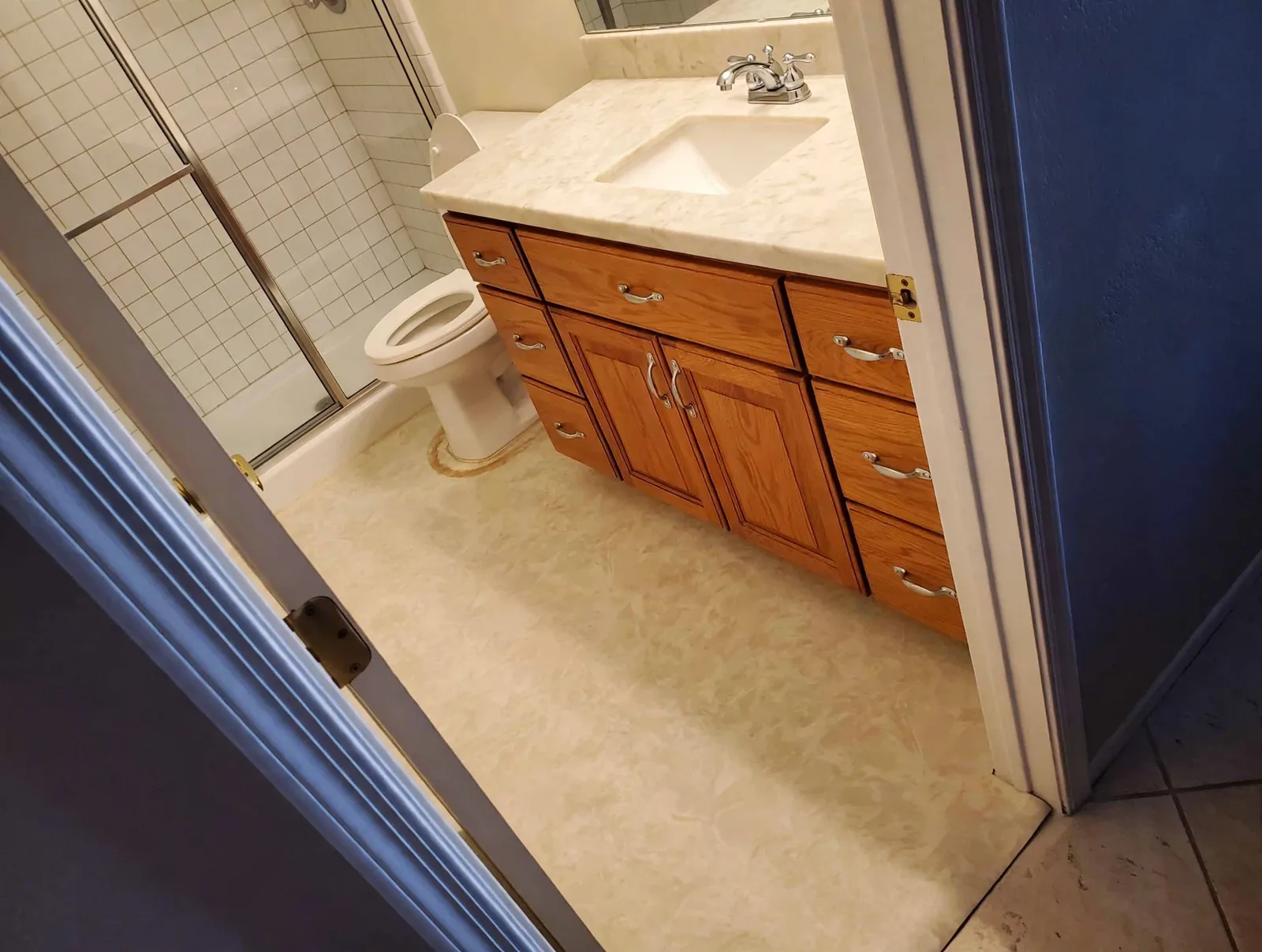
A wet room gets porcelain tile, graded to the drain, with waterproofing behind it. A dry room that gets traffic gets porcelain tile or luxury vinyl plank, chosen by how much dust and how many feet it will take. A bedroom or a living room that wants wood gets engineered hardwood, with a UV-cured urethane finish where the sun comes in. A kitchen gets a floor that can be wiped clean after a spill, and a laundry room gets a floor that can take a leak without holding water. The material follows the room, and the price follows the material and the area.
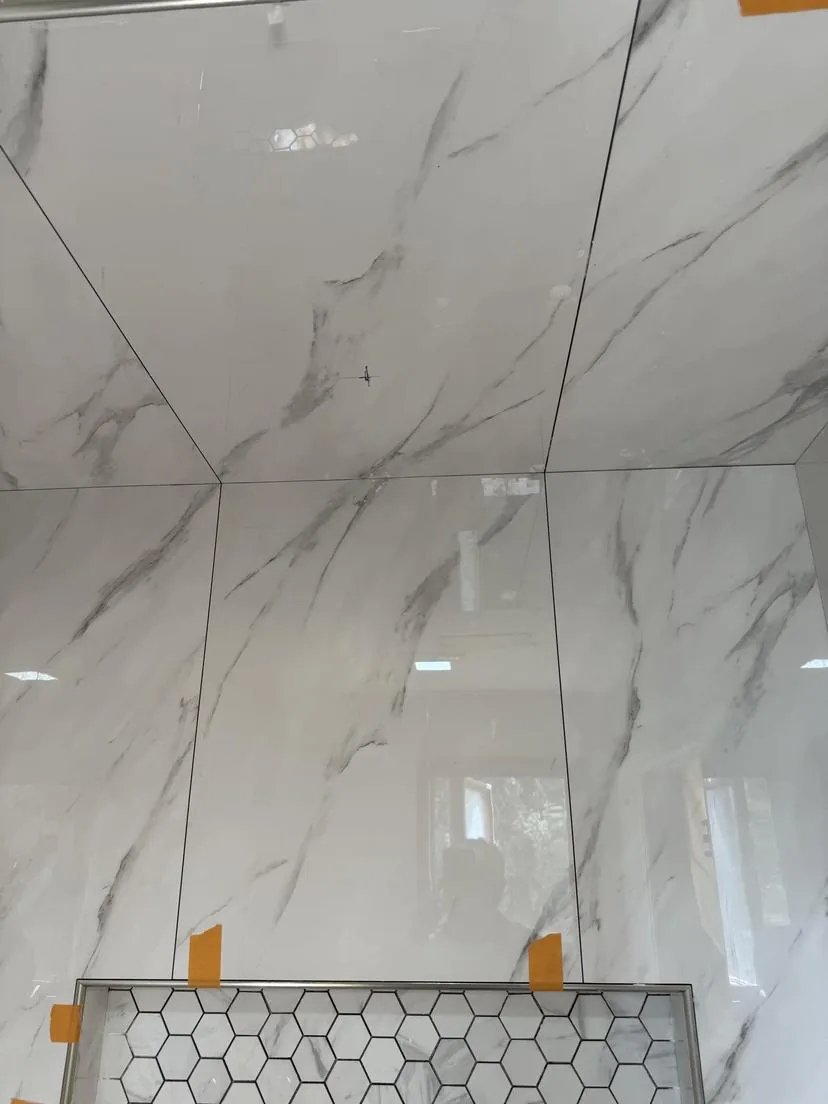
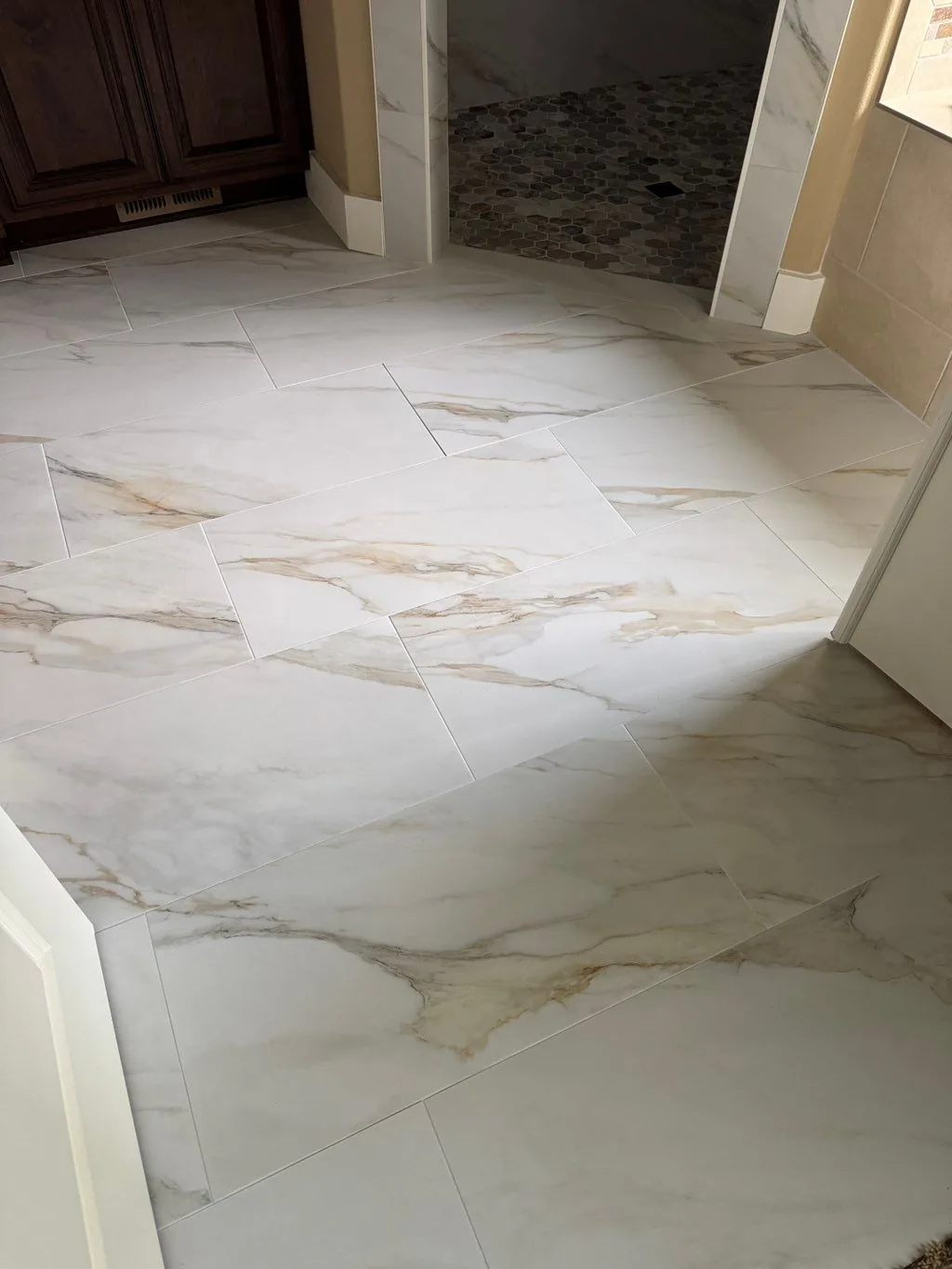
A porcelain and marble tile field in a real room, read at the ceiling and niche angle: the material as it actually lands.
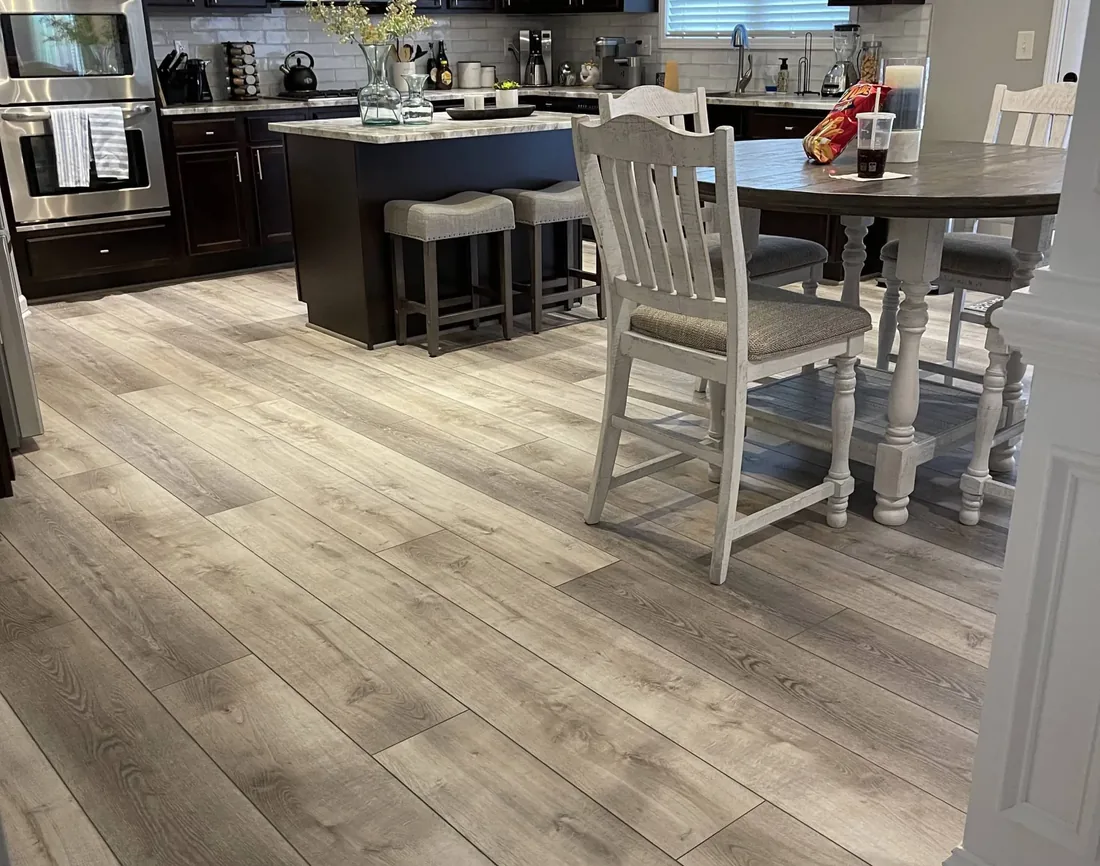
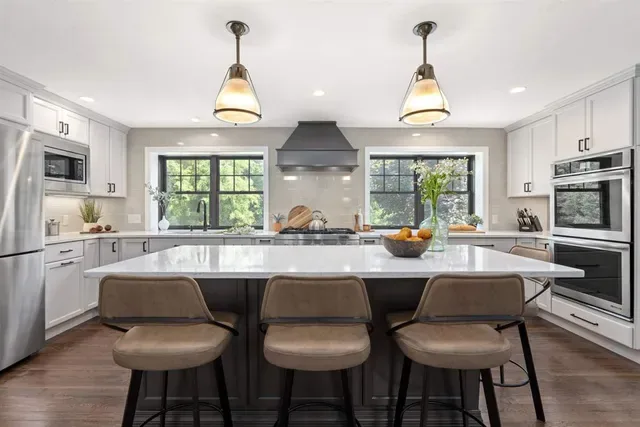
A finished LVP wood-look floor in a kitchen and dining room: a dry-room floor that takes daily traffic without complaint.
Tile and flooring are priced as a component inside the kitchen and bathroom scopes, from a bathroom refresh at $8,000 to $15,000 to a full-gut kitchen at $55,000 to $95,000. A tile or flooring only job is priced in the written estimate as its own scope, per square foot, from the material and the area.
Porcelain tile is the floor most rooms here choose: denser, less porous, handles heat, and resists red-dust scratching.
It is dimensionally stable where hardwood shrinks and gaps, which suits a dry room that gets traffic. It needs a wear layer that can take traffic and dust.
Engineered hardwood is far more stable than solid hardwood in desert dryness, which can crack. A south-facing room needs a UV-cured urethane finish.
Yes, where the rest of the room is sound. A tile or flooring only job is priced in the written estimate as its own scope, per square foot, from the material and the area.
The material, the square footage, and whether the floor is in a wet room. The written estimate prices each as its own line.
Red dust scratches. Porcelain tile resists it, luxury vinyl plank needs a wear layer that can take traffic and dust, and hardwood needs a UV-cured urethane finish in a south-facing room.
A bathroom floor is a waterproofing system first and a tile second. The floor is graded to the drain, and the waterproofing is built as a system behind the tile.
Yes. St. George Bath & Kitchen is licensed and insured.
Yes. If the floor we laid is not right, we come back and make it right, and the walkthrough at the end is where we go through the room together and write down anything that needs another look.
Call 435-412-4316 or send the form. Tanner Beck, our Operations Manager, comes out, looks at the floor you have, and measures the room.
What floor you have now, what is and is not working about it, and whether the room is wet or dry.
Send the form or call the shop. Tanner comes out, measures the room, and prices your actual scope in writing.